

This is a talk I gave at an Acton Institute conference in Rome on the Human Person, AI, and the Digital Revolution in December 2025. The talk focuses on the impact of artificial intelligence and the digital revolution on the human person and and specifically how we understand ourselves.
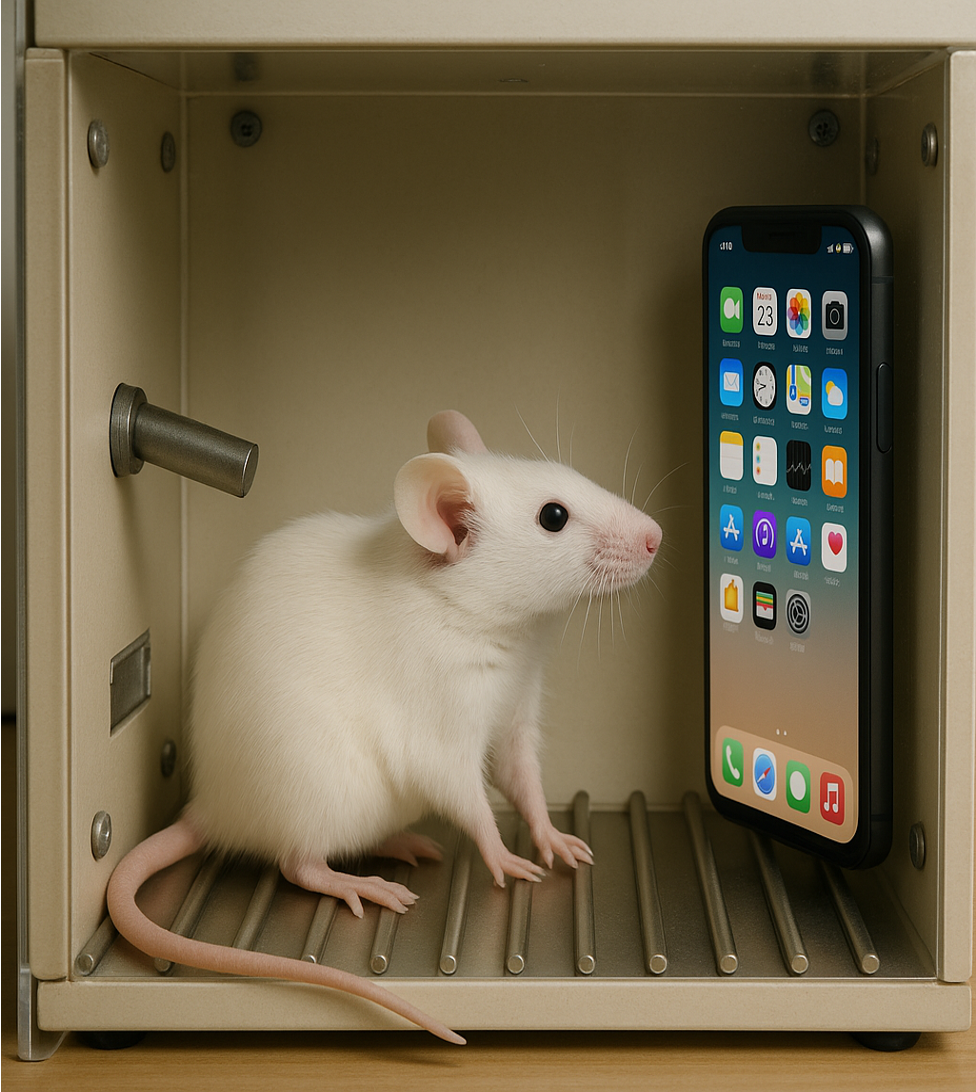
Photo Credit: Chat GPT — Prompt - MMM
While there are many benefits to digital technology, artificial intelligence is amplifying many of the negatives impacts on how we understand the person. It has led to a mechanistic vision of the human person and reductive vision of reason, freedom, emotions and more. Some of the problems I address include:
Understanding ourselves through the computer
Digital Bureaucratization
Denigration of the Body
Commodification of Persons
Surveillance
Behavior Modification
Transhumanism — AI, CRISPR, and designer babies
I conclude with a response of philosophy of the person that is not filtered through computer analogies, but grounded in the vision that being is good, matter is good, our bodies are good - not accidents - but constituent of who we are, and with richer concept of reason, intelligence, emotions, and our social nature, and with agency and grace.
A key element of digital revolution is Claude Shannon’s work on information theory in which he discusses Noise and Signal: The Gospel and Christian vision of the person is the signal in the midst of so many distortions about the nature and destiny of the human person.
Outline and Themes
The Nature of the Digital Revolution
The Digital Revolution is not a single phenomenon; we are still in its early stages, and it is hard to predict what will happen.
It has produced:
Increases in productivity
Medicine
Education
New industries and faster, broader globalization
Mobile and satellite telephony, bypassing landlines, especially impactful in the developing world
De-materialization (“10 things to one phone”)
There are many positives but there are also trade-offs – “with the invention of the car, comes the car crash”
Key Distinctions
Distinction 1: Technology vs. the Technological Society /The “Technological Paradigm” — Pope Francis)
Technology is what human beings create. We are called to complete creation.
Technological Paradigm is a Worldview
Whatever can be done is permissible
All problems are technical problems
Many dominant technology platforms are infused with secular, materialist, and transhumanist values, producing addictive products and harmful behaviors, often despite known negative effects.
As noted in Pope Francis Encyclical Laudato Si’, technological power has not been matched by growth in responsibility, values, and conscience. (Guardini)
Distinction 2: Critiquing technology ≠ rejecting technology or innovation, penicillin or hospitals; nuance is required. Technology is not neutral and shapes us for good or ill.
Distinction 3: There are some who worry about apocalyptic scenarios – “If anyone builds it, everyone dies.” Others reject these outright. Since no one can successfully predict we can talk about positives and negatives without affirming either position.
How AI and Digital Technology Shape our Self-Understanding
Distortion of the Person (Starting with Consciousness)
AI exacerbates the problem of understanding ourselves through the analogy of our creation: we see ourselves through the machine.
This is not new: in the Industrial Revolution, mechanistic ways of understanding the person, the family, the economy, and society fueled the idea that everything could be planned and social engineered.
In many discussions of AI, the human person is approached beginning with consciousness—not reason, freedom, embodiment, social nature, or the image of God—so we interpret the person through the lens of the computer: man through machine.
Contrast this to Catholic philosophy of the person which begins with the person as:
“an individual substance of a rational nature, created in the image of God,” with reason seeking the good, true, and beautiful; free will; embodied and “made out of the dust”; born into families and cultures—our bodies are not an accident of our personhood.
We are not simply consciousness driving around in a body; as St. Thomas Aquinas says: “I am not my soul.”
Only a small part of brain activity is actually conscious; yet AI discourse often equates consciousness with personhood and reduces reason to discursive ratio, ignoring intellectus.
Reductionism in Thinking and “Intelligence”
Artificial Intelligence is a certain way of “thinking”: discursive and explicit, fast processing, but not thinking properly understood.
It resembles what Iain McGilchrist describes as a Left Hemisphere dominated approach: reductionist, explicit, mechanistic.
Parallel between the ratio and the intellectus in Saint Thomas Aquinas – See for example Antiqua et Nova
Related to Benedict XVI Regensburg Address and the problem of limiting reason to the empirical.
This can further solidify the mechanistic “technological society” (Del Noce) / “technocratic paradigm” (Pope Francis).
McGilchrist’s analogy (The Master and his Emissary):
The master has a holistic vision and knows purpose and meaning; the emissary is skilled at tasks but cannot see the whole.
AI is an emissary: immense computational power, but it cannot grasp deeper meaning. Reliance upon AI has the great possibility of leading us astray.
Digital Bureaucratization and Abdication of Judgment
Pope Leo has expressed worry that we may decrease our competence by becoming overly reliant on AI.
There is danger of abdicating decision making to algorithms. Standardization and efficiency can be good, but algorithmic rigidity can undermine prudence and create injustice.
Denigration of the Body
A recurring theme in history—especially in post-Christian societies—is gnostic rejection of the body.
The body is treated as accidental; this distorts relationships, sexuality, marriage, children, and self-understanding.
This is not just AI; it is part of the broader technological paradigm.
Alignment: We Already Have an Alignment Problem
Debate about AGI and super-intelligence includes fears that “if anybody builds it everyone dies,” yet even rejecting machine consciousness, there are serious alignment concerns.
Loss of Privacy, Surveillance, and Social Credit
We already face loss of privacy and “surveillance capitalism.” With “free services,” “you are not the customer, you are the product.”
AI exacerbates this: more data can be collected and analyzed, including the potential for social credit systems.
Behavior Modification
One of the most dangerous aspects is behavior modification: targeted ads and content influence you.
You are not just seeing a billboard; you’ve entered a “Skinner Box” of operant conditioning.
Jaron Lanier: “We’re being tracked and measured constantly… We’re all lab animals now.”
Commodification of Persons
Surveillance and behavior modification are part of a larger commodification of persons: our hopes, dreams, conversations, and relationships become raw material—“we are the raw material.”
Relationships, Entertainment, and AI Companions
Constant entertainment and algorithmic content can decrease sensitivity to evil
Digital media correlates with depression, anxiety, loneliness, and less life satisfaction; it forms “small souls unprepared for real relationships.”
As AI grows, more people turn to AI for friendship and love; AI chatbots can be sycophantic, mirror desires, detach users from real relationships, and there are cases of chatbots encouraging self-harm and suicide.
Transhumanism and AI + Genetic Engineering
Underlying much AI development is transhumanism: combining biology and technology to create a new type of man, the next step in evolution.
AI combined with genetic engineering (CRISPR + computing power) raises profound threats, including “designer babies” (e.g., the engineered embryos of twin girls to resist HIV).
This creates deep confusion about God, creation, and who we are – Ratzinger on Golem – See Anthropology and Culture
Responses
Innovations in Law, Commerce, and Technology
• Rule of law
• Build digital technology that servse the person and family and church
• Build commerce that serves families and communities
• Build de—centralized technology
• Digital subsidiarity
Ultimately, we are in an anthropological struggle
What does it mean to be a human person? And a debate about metaphysics and eschatology.
For this there is no technical solution. The solution to the crisis of our times is not found in the technical world.
Key Response: We must escape the technological paradigm and present the gospel of Jesus Christ the good news about the human person.
· We are embodied, embedded persons endowed with freedom and reason – with a social nature directed to deep loving relationships.
Ultimately: we are in an anthropological struggle over what it means to be a human person—there is no technical solution.
The answer is to reaffirm the the Good News of the Incarnation, and the Good News about the human person—made in the image of God, endowed with reason and freedom, made for relationships and love.
Matter is good; marriage, sex, children are good; our bodies are not an accident —“In my flesh I shall see God”
Technology cannot be a substitute for in-person relationships with other people in families in friendship in religious communities.
We must escape the hall of mirrors of the technological paradigm and re-present the Gospel: the real work is done in friendship, families, relationships, and the Church
Liturgy and worship where we commune with our creator — it is only here that we worship God with minds, hearts, voices, and bodies. Here the goodness and unique and unrepeatability of the person is affirmed
Neither Optimist nor Pessimist – Realism and Hope
Agency and Grace. Behavior Modification is very powerful, but we have reason and freedom and a community.
A key element of digital revolution is Claude Shannon’s Information Theory which includes the idea of Noise and Signal: The Gospel and Christian vision of the person is the signal amidst the noise
SELECTED READING LIST
John Paul II: Redemptor Hominis Benedict XVI – all encyclicals especially Deus Caritas Est, Spe Salvi, Regensburg Address
Joseph Ratzinger - Values in a Time of Upheaval, Joseph Ratzinger in Communio – Anthropology and Culture
Pope Francis Laudato Si -- especially on the Technocratic Paradigm
Pope Leo homilies and messages on AI
Antiqua et Nova - Note on the Relationship Between Artificial Intelligence and Human Intelligence Dicastery for Doctrine of the Faith / Dicastery for Culture and Education
Augusto Del Noce, The Crisis of Modernity, The Problem of Atheism, The Age of Secularization
Iain McGilchrist, The Master and its Emissary, The Matter with Things, Ways of Attending
Fred Turner, From Counterculture to Cyberculture, Stanford University Press
Jaron Lanier: 10 Arguments to Delete your Social Media Right Now
§ C.S. Lewis
o The Abolition of Man (Short)
o Mere Christianity (Medium Length)
o “The Poison of Subjectivism” (Essay)
Bill Drexel: “The AI Genetics Revolution is Coming” https://www.thenewatlantis.com/publications/the-ai-genetics-revolution-is-coming
§ Dietrich von Hildebrand
o The Heart
o Nature of Love
§ Robert Spaemann
Love and the Dignity of Human Life (Short)
Bishop Eric Varden:
The Shattering of Loneliness
Chastity: Reconciliation of the Senses


