

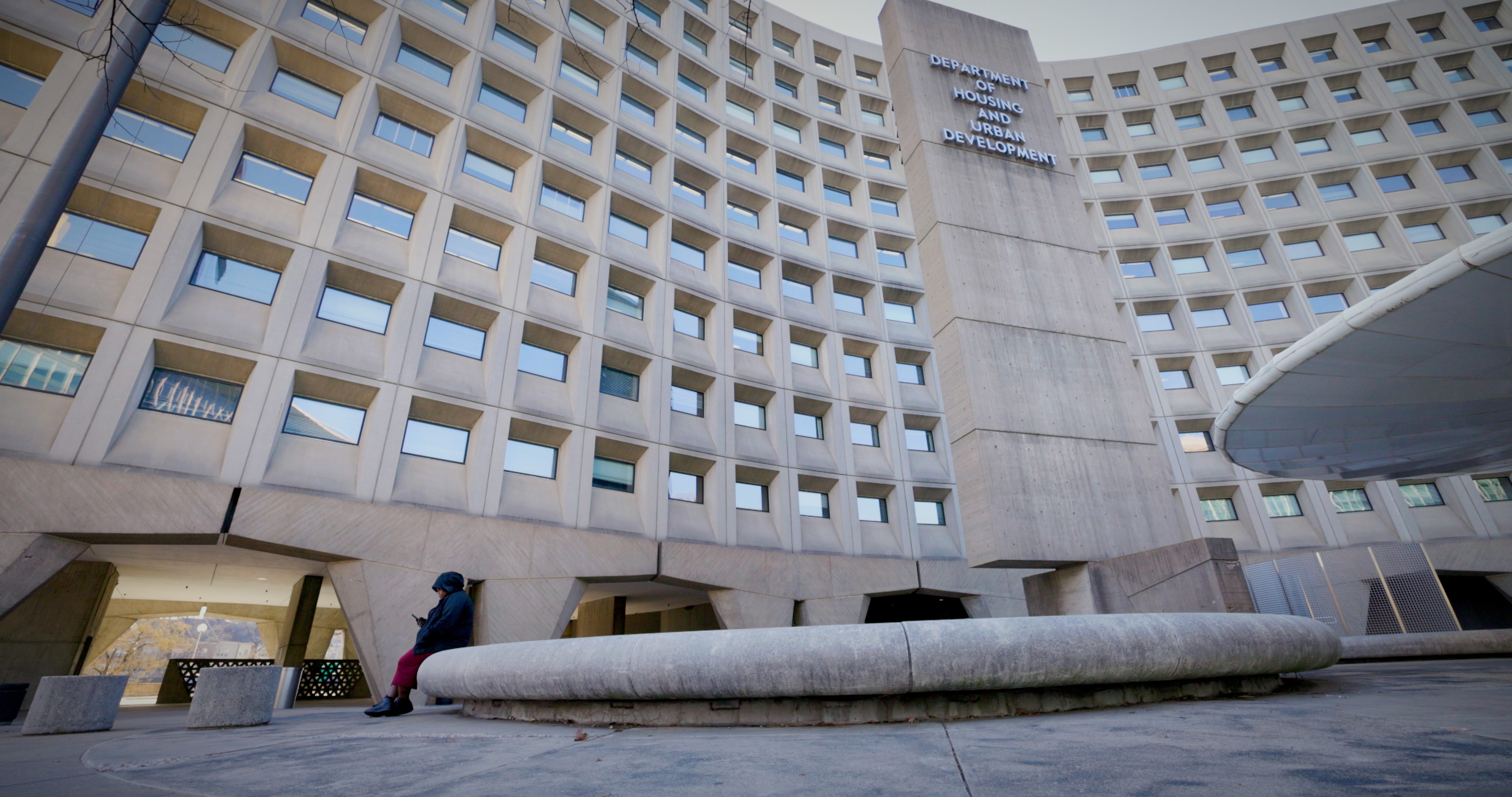
This episode of The Moral Imagination Podcast is a lecture I gave last year on Escaping the Technocratic Paradigm at a conference on Social Engineering the Poor.
My main argument is that the dominant way that we have addressed poverty and other social problems throughout the world has been based on a mechanistic vision of the person and society – a “technocratic paradigm.” This technocratic vision has led to attempts to scientifically manage people, which not only failed to deliver on its promises, but has caused injustice, weakened families, and the natural communities where people flourish.
Inspired by the success of industrialism, the assembly line, advances in science and technology, and especially the military victory of World War II, the idea was that we could use the state and social policy to do incredible things. We won the war. Let’s now use our energy, political and economic power, social engineering, and technology to “win the peace.”
My argument is that this dominant, technocratic paradigm fails. There is no technical solution to the problems of evil, sin, suffering, poverty, and death. The technocratic paradigm fails because it is based on a mistaken vision of the human person, a simplistic view of society. It is based on erroneous visions of justice, a lack of regard for the family as the fundamental unit of society, a degrading of the importance of economic opportunity, and failure to practice solidarity, subsidiarity, and charity properly understood. Ultimately it reduces poor people to objects to be managed, rather than seeing people as protagonists with freedom and capacity.
OUTLINE
I divided the talk into 4 main sections:
First, I set out the idea of the technological society and technocratic paradigm.
The term technocratic paradigm can be found in the encyclical Laudato Si from Pope Francis where he writes, also quoting the theologian Romano Guardini and
There is a tendency to believe that every increase in power means “an increase of ‘progress’ itself”, an advance in “security, usefulness, welfare and vigor; …. as if reality, goodness and truth automatically flow from technological and economic power as such.
He argues that our “immense technological development has not been accompanied by a development in human responsibility, in values and conscience.” This echoes the work of C.S. Lewis, an early critic of technocracy in his book The Abolition of Man and his novel, That Hideous Strength, and the writings of Benedict XVI, especially in from Jesus of Nazareth and Spe Salvi
Second, I give various examples of the technocratic paradigm in practice including:
Architecture
Education
Agriculture and Monoculture
Family and Marriage
Healthcare
Genetic Engineering
Euthanasia
World Economic Forum Vision
Behavior Modification
Transhumanism
With a specific focus on how technocratic poverty alleviation programs have cause harm including
Urban Renewal
The loss of intergenerational wealth
Welfare and Policy Programs
Public Housing
Foreign Aid
UN Millennium Goals
Population Control Programs
Third, I set out some of the key attributes and characteristics of the technocratic paradigm and the technological society
Scientism and Philosophical Materialism
Plastic Anthropology – person has no essential nature, but is simply malleable
Myth of Progres
Utility and Efficiency as Higest Values
Primacy of the Technical
All problems are ultimately technical problems
If it is technically possible it is material possible
The shift from Charity to Humanitarianism
Denial of the Transcendent + Utopian Ideology
Fourth I contrast the technocratic approach with a non-technocratic, decentralized, and specifically Christian approach to thinking about society and addressing poverty focused on seven key principles:
Christian anthropology. What does it mean to be a human person?
the family as the fundamental unit of society – and fundamental economic unit.
Charity as opposed to humanitarianism.
Justice – legal, commutative, and distributive
The principle of Solidarity,
The principle of Subsidiarity
Eschatology
I argue that the problem of the technocratic society is not simply a policy program or a technical problem, but it’s actually a philosophical and a theological problem rooted in errors of metaphysics and specifically eschatology.
As Benedict XVI writes in Spe Salvi
25. What this means is that every generation has the task of engaging anew in the arduous search for the right way to order human affairs; this task is never simply completed. Yet every generation must also make its own contribution to establishing convincing structures of freedom and of good, which can help the following generation as a guideline for the proper use of human freedom; hence, always within human limits, they provide a certain guarantee also for the future.
In other words: good structures help, but of themselves they are not enough. Man can never be redeemed simply from outside. Francis Bacon and those who followed in the intellectual current of modernity that he inspired were wrong to believe that man would be redeemed through science. Such an expectation asks too much of science; this kind of hope is deceptive.
Science can contribute greatly to making the world and mankind more human. Yet it can also destroy mankind and the world unless it is steered by forces that lie outside it. On the other hand, we must also acknowledge that modern Christianity, faced with the successes of science in progressively structuring the world, has to a large extent restricted its attention to the individual and his salvation. In so doing it has limited the horizon of its hope and has failed to recognize sufficiently the greatness of its task—even if it has continued to achieve great things in the formation of man and in care for the weak and the suffering.
26. It is not science that redeems man: man is redeemed by love. This applies even in terms of this present world. When someone has the experience of a great love in his life, this is a moment of “redemption” which gives a new meaning to his life. But soon he will also realize that the love bestowed upon him cannot by itself resolve the question of his life. It is a love that remains fragile. It can be destroyed by death. The human being needs unconditional love.
Suggested Additional Reading
Jacques Ellul: The Technological Society
Augusto Del Noce: The Crisis of Modernity
Romano Guardini: The End of the Modern World: Power and Responsibility
Iain McGilchrist: The Master and His Emissary
James C. Scott: Seeing Like a State
For a good introduction to Del Noce listen to my podcast interview on Del Noce with Carlo Lancellotti who translated his work into English
Jaron Lanier: Ten Arguments to Delete Your Social Media Right Now
Benedict XVI: Jesus of Nazareth and Spe Salvi
C.S. Lewis The Abolition of Man and That Hideous Strength
Ismael Hernandez Rethinking Charity
You can also read my forward to Re-Thinking Charity here
Eric Voegelin: The New Science of Politics
Alexis de Tocqueville: Democracy in America


